Sec. 2 of Pt. Two THE TASER QUESTIONS- DIXIE
See section two: https://oheragain.com/2023/09/25/sec-2-of-pt-two-the-taser-questions-dixiee/
See section one : Lorain- The Taser Question Pt2. Dixie Shooting | OH Her Again! (oheragain.com)
THE WAY OF THE TASER
NOTE: Just some background re the equipment used by an Animal Control Officer. Firstly, they have special units to store needed equipment when handling animals, for the animal’s safety and those of the Animal Control Officer


Animal Control Officers
Obviously, a Lorain Police Officer has none of that equipment (although they are going to be supplied with gloves). Their options open to them are a gun and Taser. However, as we will see in this report the Taser was NOT an option.
When a dog is Tasered, it experiences a sudden and intense electrical shock, which can cause muscle spasms, pain, and temporary paralysis1. The electric shock from a Taser can cause intense pain, muscle contractions, and disorientation in dogs.. In some cases, the shock may lead to cardiac arrest or other life-threatening conditions, particularly in dogs with pre-existing health issues2. The electric shock of up to 50,000 volts will be administered, shocking the dog’s muscles and causing it to go temporarily paralyzed
Yes, Tasers work on dogs. You can use a Taser on dogs, and it will shock them. But this is not recommended because preventing dog attacks by using a stun gun can cause the death of dogs. Don’t even think about using a Taser even if dogs act aggressively towards you.
Can a Taser Kill a dog? www. learnaboutpet.com/can-a -taser kill-a dog/
Since I asked Chief McCann a flurry of question, wanting answers as to WHY NOT a Taser? I was invited to learn for myself what the Taser is all about and the situation that happened with Dixie the Dog.
I have to admit I was very nervous, I hate guns etc. They quite frankly scare me. I arrived at the Lorain Police Department.
First of all we went through the Body Worn Camera footage. It was explained in depth what was happening. I then asked to see the equipment that an LPD Officers wears when on patrol. This was shown to me by an on duty officer.
Please note where in Lorain, Ohio our officers carry their Taser , it is on their weak hand side due to the number of accidental firing when both weapons are carried on the same side as reported across the across the nation.
“Keep in mind that Tasers require both prongs to land on the target …….When a Taser is deployed, two small prongs are discharged and puncture the skin of the intended target. The prongs, which are connected to insulated copper wire, deliver an electric current of 50,000 volts.”
Police chief explains how deployment of Taser, gun differ (yahoo.com)
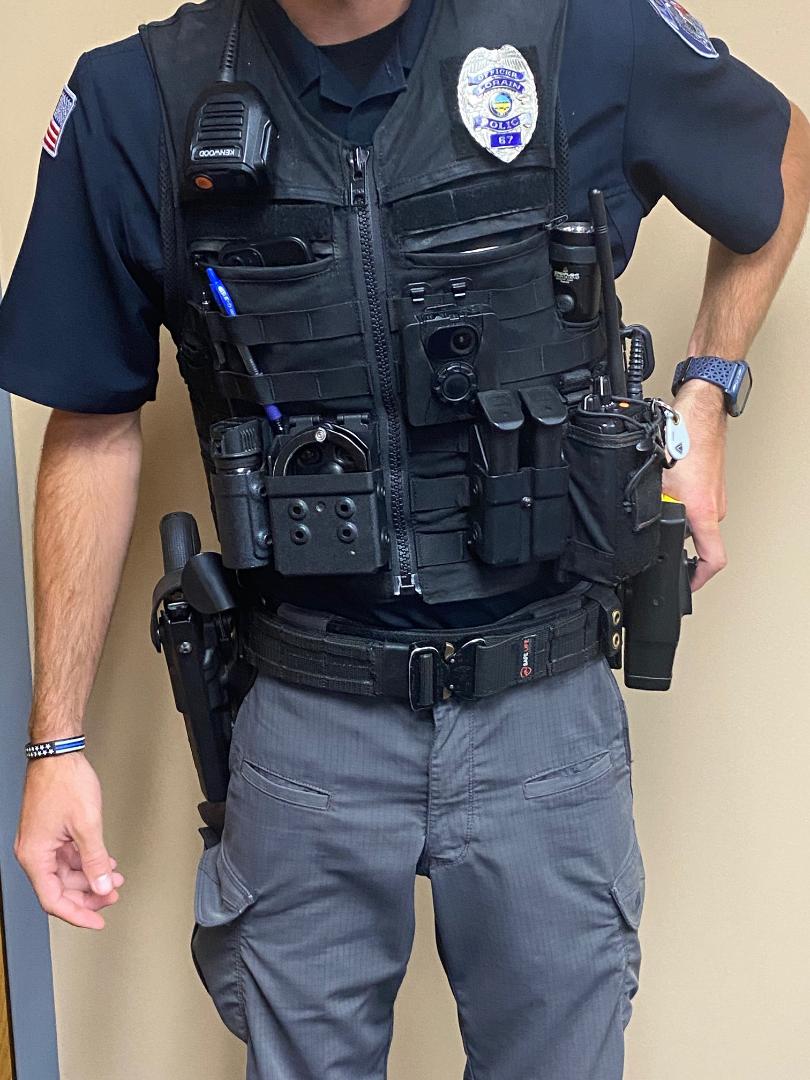
Q: Does a Lorain Police officer carry any other tools such as Mace , Pepper Spray, stun gun and if not why not? What is the thinking of the attributes or non attributes of those items?
A: CHIEF McCANN :
Officers have access to several tools like mace, straight batons, ASP Baton, PR24 and a Taser. It would be impossible to carry all these tools on ones’ person while on duty. Each time a “new” option is developed, we have to make a decision on which tool we will remove to make room for the new “tool”. No system is perfect but officers deal with violent human 99.9% of the time so our equipment must be primarily to combat that threat.
Q: If you could, please explain how a Taser works. drawing it? ( is it loaded when the officer carries it), The timing if available of pulling the Taser ( weak hand ??? or cross drawing turning it on, positioning and firing …. ,
A: CHIEF McCANN :
The Taser is secured into a holster. Officer must either cross draw using his strong hand across his body or his weak hand on the weak side of his body. It takes about 1-1.5 seconds to un-holster, turn on and aim the Taser.
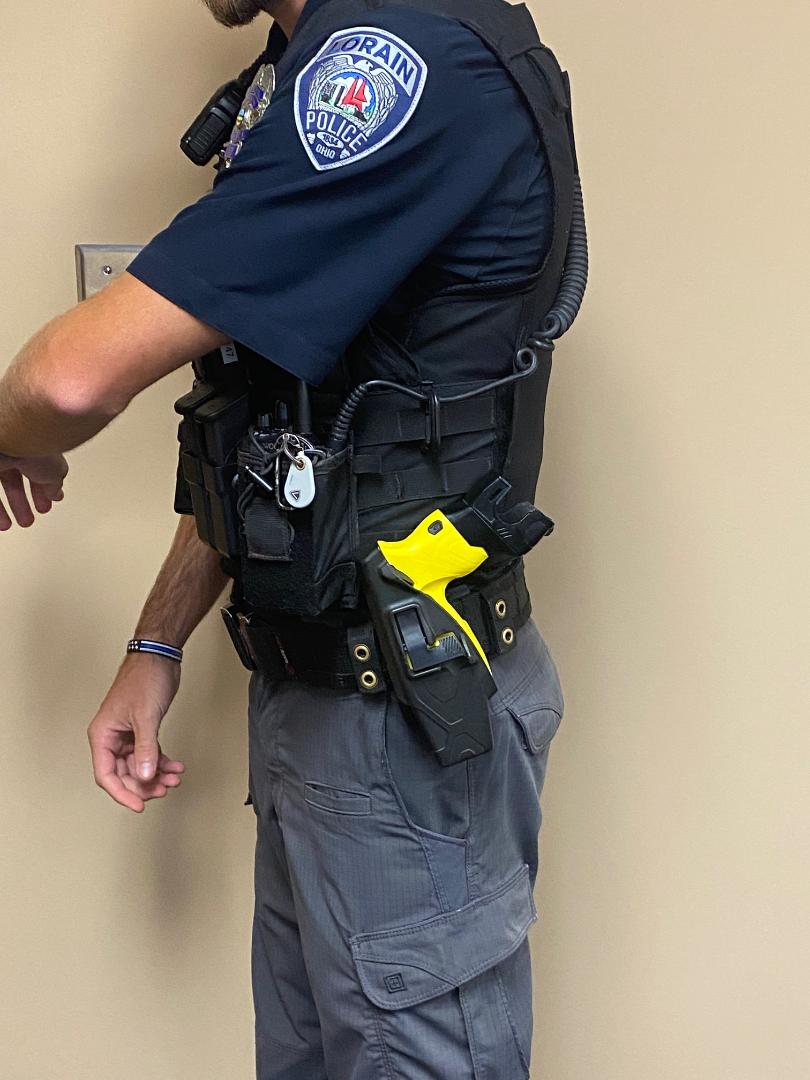
Q: If it is on the weak hand) side which fingers???( thumb??? is used) to turn it on and the position of the trigger finger. If it is a cross over situation same question.. How many volts .the number of degrees ( 7) how does an officer calculate that …
A: CHIEF McCANN
Officers don’t get involved in the science behind the device itself such as volts. Normally the Taser is turned on using the thumb of the hand used to grip the Taser and the trigger finger is indexed on the frame until ready to fire. Officers don’t calculate the degree spread.
They understand the farther away you are from the target the larger the spread, just like you witnessed. In order to hit a dog running at you, the dog would have had to been 1-2 feet in front of you and there is a high probability you would have hit the dog in the head if you even hit the dog.
Q: Are you allowed a head shot… if possible…. if only one prong hits the animal would that stop the forward movement ???
A: CHIEF McCANN
Head shots would not work and are considered deadly force.
NOTE BOTH PRONGS HAVE TO HIT THE TARGET
Q: Can you confirm if it is Department policy that in order to draw a Taser an officer has to have back -up from another officer who would be ready to use a “gun” fire arm? And in this case I believe the Officer was initially alone in the beginning of the situation.
A: Chief McCANN:
That is not correct. IF a suspect has a deadly weapon, other than a gun and we have two officers on scene, we attempt to try to deploy a less lethal option while we have a lethal option ready at the same time just in case the less lethal option fails. Officers are NEVER permitted to use less lethal option when they or someone else is facing an immediate threat of serious physical harm when they are initially alone.
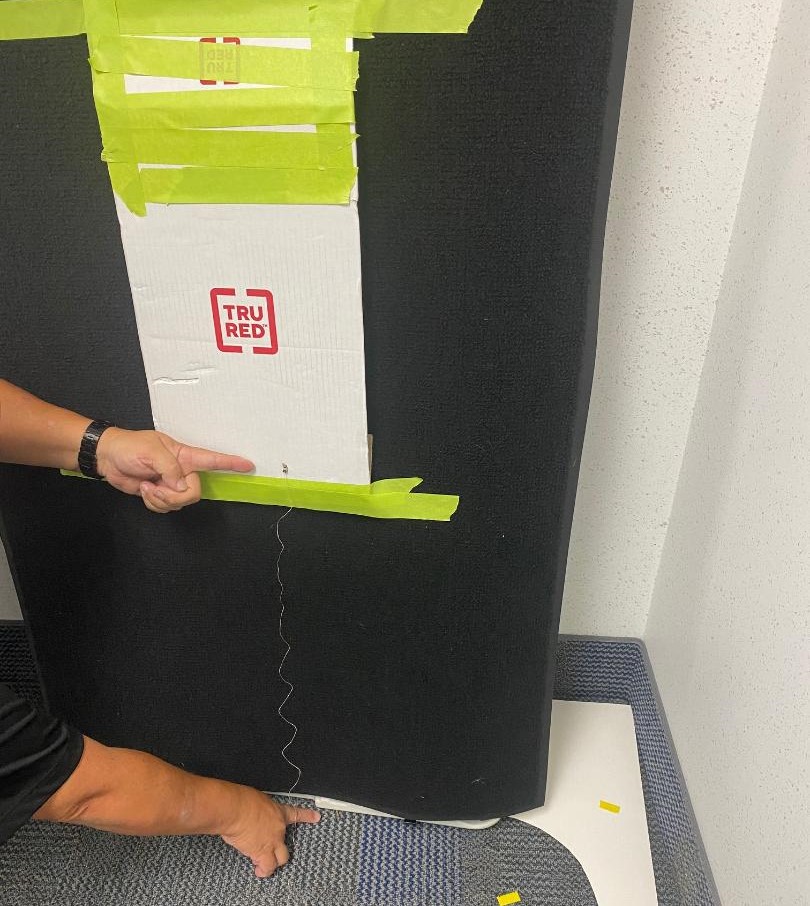
The officers set up a static, standalone target for me. I was instructed to stand approximately 8 feet from the target.
I was told that when I shot the Taser both prongs had to land in the white space of the target. The green spaces represented the head and legs of a dog. I was given four (not armed) practice sessions to get the feel of the Taser and how to turn it on.
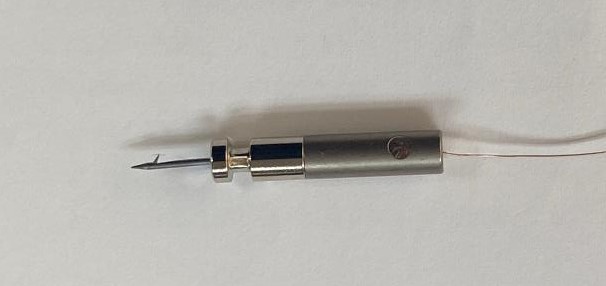
I did NOT have to draw the weapon, either with my weak hand of cross draw . I was shown how to turn on the Taser look at the laser light where it hit the target and go up 7 degrees. Quickly calculating in my head, math was never a strong point, I was trying to figure out where the 90 degree angle would be and from what baseline I would calculate 7 degrees. I hadn’t a clue.
I found arming the Taser with my thumb and having my “trigger finger not on the trigger” very awkward and uncomfortable. It was very difficult even when I was helped, it just felt like a very strange movement to me. , but I was allowed to practice that part with help. It wasn’t easy for me to turn it on but that maybe because of small hand. I certainly couldn’t do it quickly and smoothly.
I had all the time in the world and 4 practice shots before the officer armed the Taser. I was not expecting the “bang” I don’t know why I thought it would be a zapping sound. I know I screamed with fright at the sound.( much to the amusement of my husband who accompanied me)
The green tape represents the NO Shoot head area. My first shot landed on the target, well at least ONE prong did, unfortunately it would have been in the dogs eye, which was not good. The other landed off the target altogether!
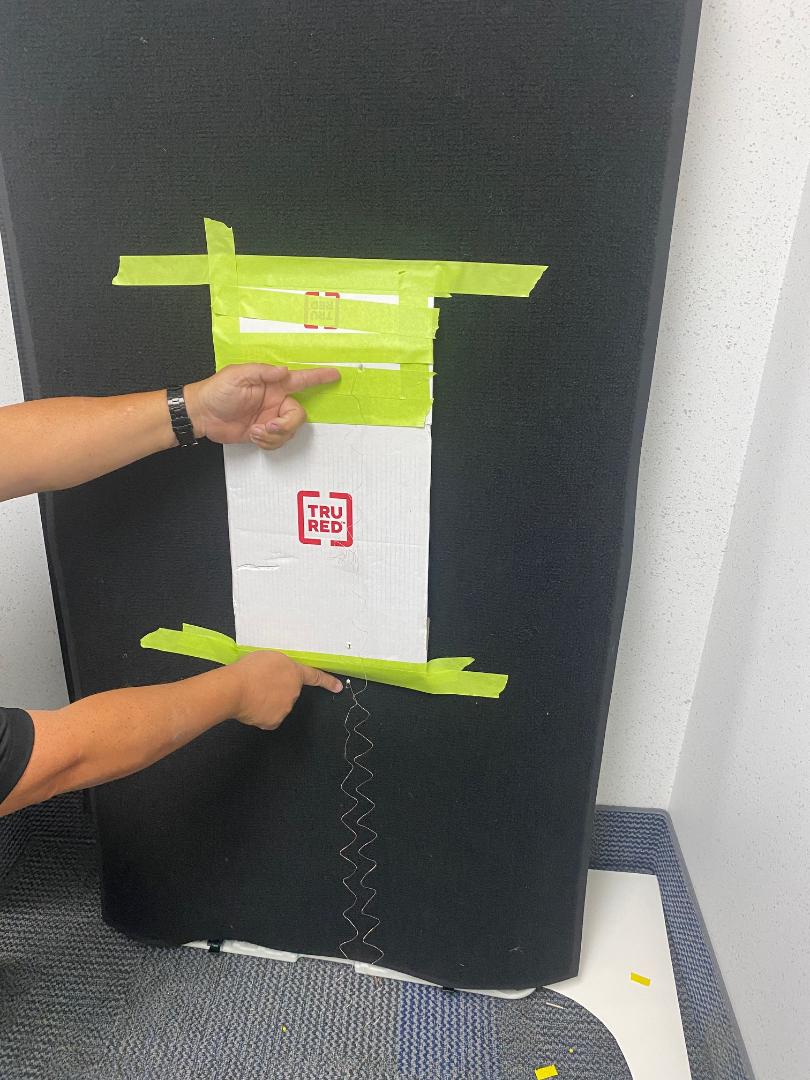
Now I had the feel of it I was allowed a 2nd shot .I really tried and had all the time in the world . The one prong hit the dog above the back leg and the other in the floor
Now it was the turn of the officer!
The officer stood approximately within the 4 foot position that Officer Palmer stood away from the dog that day from the target. He too, didn’t have to draw the Taser from the holster and could shoot at will, which he did very quickly. None of the prongs hit the target.
He is very experienced, in a controlled environment and knows what he is doing and still would have missed. Coupled with the fact he didn’t have to take time to draw and was under no stress as someone behind me stated. It is impossible
As for “stun guns” they are different from Tasers
“The range is one of the most significant differences between stun guns and Tasers.
Stun guns require direct contact with the target’s body to be effective, meaning the user must be within arm’s reach of the attacker.
Tasers, on the other hand, can be used from a distance of up to 15 feet, allowing the user to incapacitate the attacker before they are within striking distance.

 OH Her Again!